
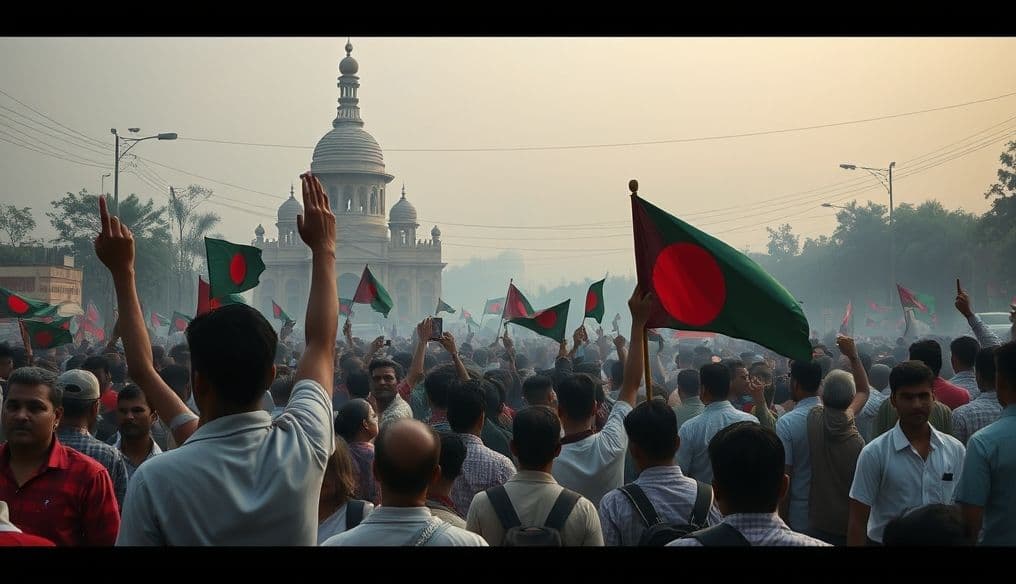
The summer of 2024 witnessed an unprecedented wave of student-led protests across Bangladesh, fundamentally reshaping the nation's political landscape. What began in July as a localized movement advocating for reforms to the government's civil service quota system quickly escalated into a widespread demand for systemic change, culminating in the resignation of the long-serving Prime Minister and the collapse of the Awami League government in early August. This period of intense civil unrest, marked by significant public participation and state repression, demands a thorough academic examination to understand its origins, trajectory, and profound implications.
The initial catalyst for the July-August protests was a Supreme Court ruling that reinstated a 2018 government circular, effectively reintroducing a quota system in public employment that disadvantaged general category students. This decision ignited simmering resentment among university students, who had long argued for merit-based recruitment. The "Quota Reform Movement," building on earlier iterations, rapidly gained traction, driven by a decentralized network of student activists utilizing social media platforms to organize and disseminate information. Their initial demands were clear: abolition of all quotas and a merit-based system.
However, the movement's scope broadened dramatically in response to the state’s increasingly heavy-handed approach. As security forces and affiliated groups violently suppressed peaceful demonstrations, resulting in numerous casualties, injuries, and arrests, the students' grievances transcended quota reform. The protests evolved into a broader call for an end to political repression, human rights abuses, and what many perceived as authoritarian governance. The demand for the Prime Minister's resignation and the establishment of an interim government became central, reflecting deep-seated frustrations with the prevailing political order and a desire for democratic accountability.
The state's response was characterized by widespread internet shutdowns, mass arrests, and the deployment of security forces, including the police, Border Guard Bangladesh, and eventually the army, alongside armed party cadres. This escalating violence further galvanized public support for the students, drawing in a diverse cross-section of society, including professionals, civil society members, and ordinary citizens. The sustained pressure, coupled with a palpable loss of control by the government, led to a critical juncture where the state apparatus appeared to falter, ultimately paving the way for the government's dramatic fall.
The repercussions of the 2024 student uprising are multifaceted and continue to unfold. The interim government now faces the daunting task of restoring order, addressing the grievances that fueled the protests, and preparing for free and fair elections. The events have highlighted the enduring power of student activism in Bangladesh's political history, demonstrating its capacity to catalyze profound societal shifts. Furthermore, they underscore the fragility of political stability in the face of widespread public dissatisfaction and the critical importance of responsive governance. This period represents a pivotal moment, offering valuable lessons on youth agency, state power, and the complex dynamics of social change in a developing democracy.